


I spent almost three months trying to grow celery last year.
Which still sounds ridiculous every time I say it out loud.
The whole thing started because of my lifelong bout with high blood pressure. After two heart attacks, one in 2015, one in 2020, you start paying extra attention when somebody mentions something might help naturally.
The medication does its job. I take it. But anything that might let me move the numbers without leaning harder on prescriptions is worth a real look.
A nutritionist that I follow online kept talking about how celery juice helps lower blood pressure, so I figured I would try it.
In the process, I realized how much celery it took just to make one glass.
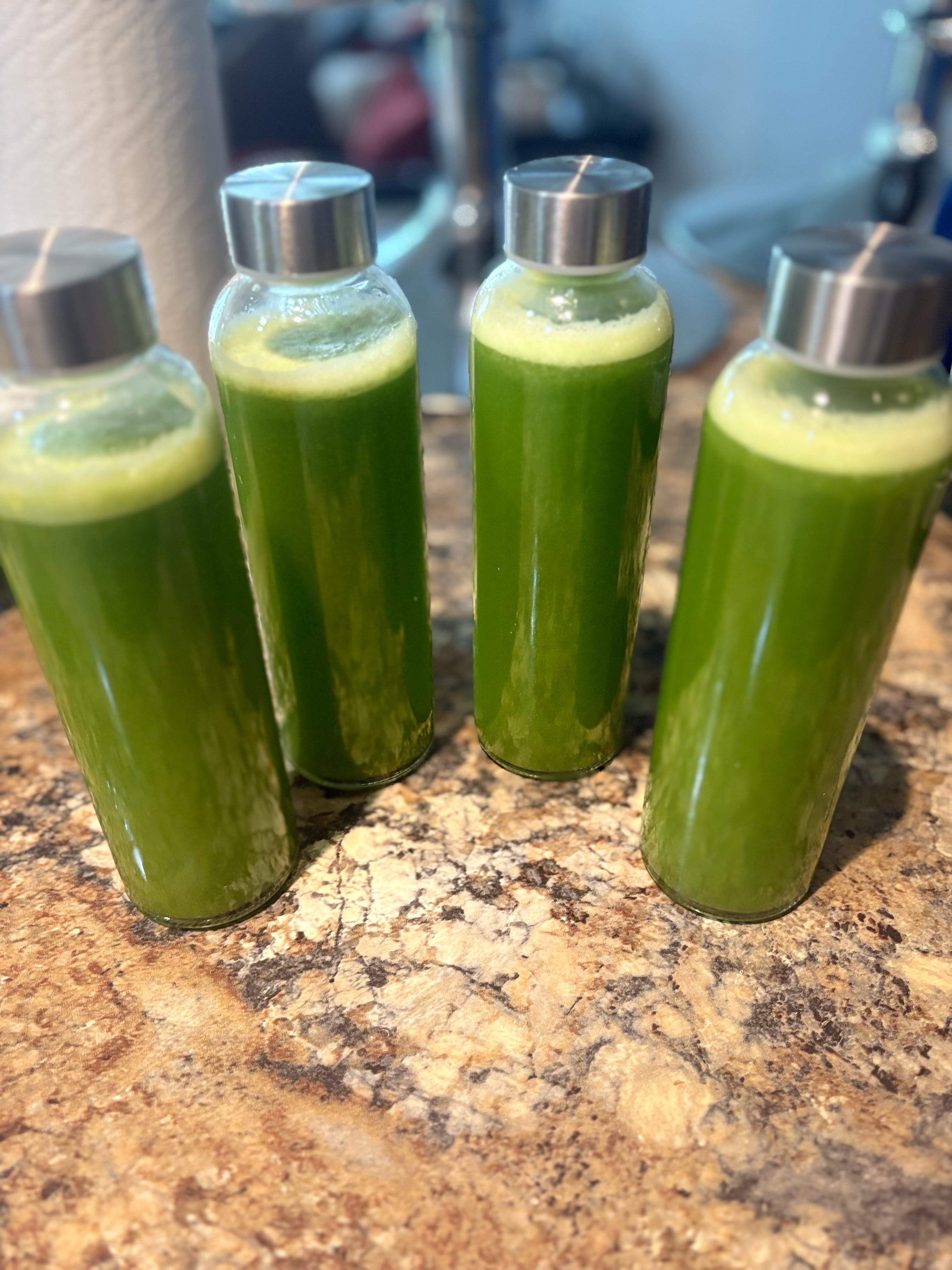
I was going through stalks so fast I started thinking, “Surely this would be cheaper if I just grew it myself.”
That confidence lasted about four days.
Because apparently growing celery and keeping celery alive are two completely different things. Who knew?
First batch died.
Second batch died slower.
Third batch finally worked.

It turns out, the problem ended up being sunlight. There was too much direct Florida heat on the patio. The celery needed light, just not that kind of light.
Standing there looking at celery actually growing outside my house, I realized how much of life works like that.
Because “grow celery” was never a plan.
It sounded like one. But it wasn’t.
It was a direction with no structure attached to it.
The real progress didn’t start until I understood the variables.
How much water. How much sun. Where to place it. What to adjust when things stopped growing.
Not the verb. The conditions.
I think I’ve confused those two things for most of my life.
The verb felt like enough. It sounded like action. Saying it out loud to myself, to my wife, to friends, felt like the start of something. And in a way it was. The problem is that the start does not finish anything.
The plan was always supposed to be the part after the saying. I just never knew that.
“I’m going to grow a business.” “I’m going to walk consistently.” “I’m going to get healthier.”
Those all sound like plans when you say them out loud.
But most of the time they’re just vague intentions wearing a plan’s clothes.
The business especially exposed this in me.
When I started Upper Echelon Web Designs, I thought hard work would eventually create momentum on its own. I stayed busy constantly. Tutorials. Design work. Branding ideas. Watching what everybody else was doing.
I looked productive almost every day.
But looking productive and building something are not always the same thing.
Hiring a coach changed that.
It wasn’t just about how she motivated me, but she also forced me to stop speaking in generalities.
Instead of “grow the business,” we started defining behaviors.
What actions actually create leads? What should happen every week no matter what? What numbers actually matter?
One of the first things she had me name was what follow-up actually meant.
Not “do better outreach.” A specific behavior. A specific cadence. A specific way to count whether I had done it that week.
The minute I had a behavior I could repeat, I had something I could show up to. The week stopped being a vague stretch where I “worked hard.” It became a small list of things I either did or did not do.
That changed something I had been wrestling with for years. The business stopped feeling like a thing I was hoping into existence. It started feeling like a thing I was actually building.
That changed things more than motivation ever did.
It took me longer to see the same lesson playing out in my own body.
Walking taught me the same lesson.
For years, “walk more” was my strategy.
And every few weeks I would end up right back in the same cycle. Start strong. Miss a few days. Feel frustrated. Start over Monday.
Repeat forever.
I knew exactly what was supposed to happen. I knew the benefits. I knew the science. I had read about heart disease and inflammation and step counts and zone 2 cardio more times than I could remember. The information was never the gap.
The gap was every Monday looking just like the last Monday, with the same intention pretending to be a plan. The same internal pep talk. The same calendar block I would skip by Wednesday. The same self-criticism by Friday.
I had a verb. I never had a variable.
What changed in early 2024 was simple.
I stopped treating walking like it only counted if it looked official.
I started counting all movement.
Grocery store steps counted. Parking lot steps counted. Trips around the house counted. Walks with my boys counted.
Everything counted.
Within the first few weeks, I was hitting my step goal more days than I missed. Within a couple of months, missing a day felt unusual.
Nothing about my schedule had changed. I had not added an hour. I had not joined a gym. I had not built some new pre-dawn routine I was going to white-knuckle for a month and quit. I was counting the hour I was already moving — the family time hour, the errand hour, the parking-lot quarter mile that used to feel like nothing.
That was the part that took me six years to see. Not that I needed to do more. That I needed to count what I was already doing.
And once I changed the definition, consistency started feeling possible again.
Not because I suddenly became more disciplined.
Because the behavior finally matched real life.
That distinction has been changing how I look at almost everything lately.
I think a lot of us are trying to build our lives around verbs.
Eat better. Get organized. Grow the business. Walk more.
But verbs are slippery. They sound productive while still being vague enough to avoid measurement.
Variables are different.
Variables force honesty.
You either tracked it or you didn’t.
That’s what finally changed the celery. That’s what changed the business. That’s what changed the walking.
Not motivation.
Definition.
The verb was never the plan.
The variable was.
One step. One goal. One community.