

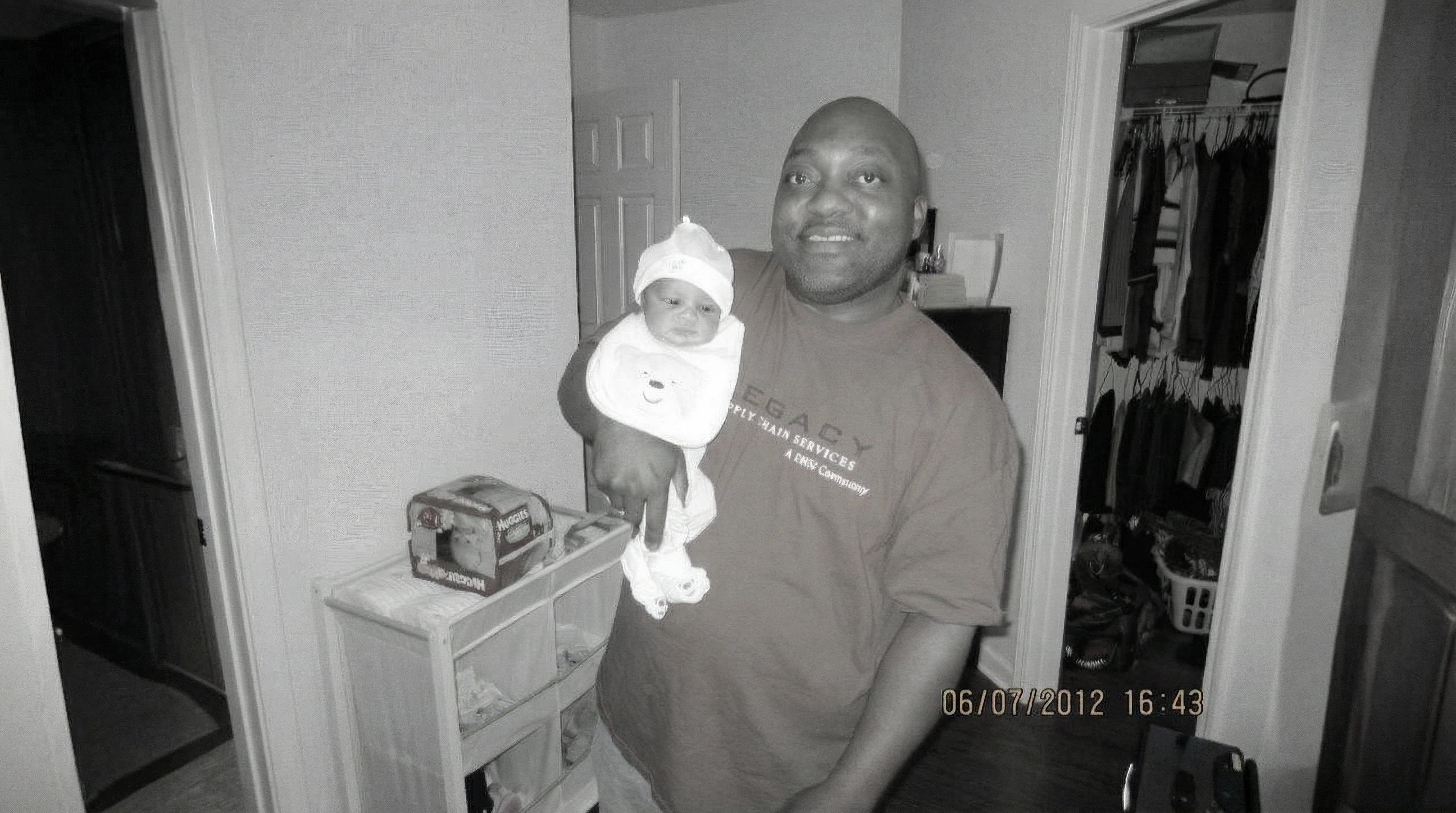
Watching my child being born was one of the greatest days of my life.
I was standing right beside the hospital bed in a dim-lit room, the kind where time feels suspended. My wife was exhausted, but she was smiling. There was peace in her face that I will never forget.
When they placed our baby in my arms, I was nervous. Not the nervousness of being unprepared. It was the feeling of holding something incredibly precious. Something fragile. Something entrusted to me.
He looked like a combination of me and my wife. I remember staring at him, waiting for him to look back. For nine months we had been having interactions with each other. I half expected him to remember, to open his eyes, focus on me, and smile.
But he could not even hold his head up.
He could not open his eyes.
He could not support himself in any way.
Before he would ever crawl, he would have to build strength in his neck. Before he would walk, he would have to learn to balance. No one in that room expected him to stand up on day one.
I wish someone had told me the same thing.
When I started my walking journey, that is exactly what I expected of myself.
For many of us, walking does not start casually.
It starts with a number on the scale. Or a blood pressure reading. Or a health scare that makes everything feel urgent.
Underneath it all is one feeling.
Out of control.
And when we feel out of control, we reach for intensity.
“That’s it. I’m walking 10,000 steps starting tomorrow.”
That was me.
And here is the part that surprises people.
I could hit it.
I hit 10,000 on day one. Sometimes I hit it for weeks.
But I could do it and not repeat it.
For over six years, my pattern looked the same.
Hit 10,000 consistently. Miss one day. Tell myself, “I’ll restart next week.” Disappear.
It was not that I could not walk.
It was that I had built a roof without a foundation.
Looking back, three things were quietly sabotaging me.
I had no worst-day plan. I had an all-or-nothing mindset. My identity was tied to performance.
If I hit 10,000, I felt disciplined. If I missed, I felt off track.
There was no baseline that could survive a busy week. No number that protected momentum when life got inconvenient. Everything was built around my best day.
So when a normal day showed up, everything collapsed.
That is why so many people quit around Day 3.
Day 1 is fueled by emotion. Day 2 is fueled by momentum. Day 3 exposes structure.
Not weakness.
Structure.
If your life is currently built for 3,000 steps, jumping straight to 10,000 does not build a lifestyle. It builds a spike.
And spikes are hard to sustain.
I eventually broke the cycle. It just took longer than I wanted.
I hit 10,000. Then again. Then again. For months I was muscling through it on pure willpower. No system. No strategy. Just stubbornness.
But stubbornness has a ceiling.
I didn’t recognize this process until I had already ground my way to 10,000 steps a day. By the time I found it, I had the streak. What I didn’t have was a way to grow without starting over.
That’s what this gave me.
In 2024 I was averaging 10,000 steps a day. In 2025 I raised it to 11,000. By 2026 I was averaging 12,500. Not because I found more hours or more motivation. Because I stopped trying to leap and started building. I looked at my actual average, added 1,000, and made that my new floor. Not my goal. My floor.
The difference was immediate. I wasn’t winging it anymore. I had a plan going forward. Each raise felt more natural because the ground underneath it was solid. I wasn’t reaching for something I hadn’t earned. I was building on something that had already held.
I had been treating every day like a performance. What I needed was a practice.
Intensity feels like control. Rhythm creates stability.
And over time, something deeper begins to shift.
You stop thinking, “I’m trying to hit a number.”
You start thinking, “I’m someone who walks.”
That identity does not form in one dramatic month. It forms in ordinary days. Days that are not impressive. Days that simply meet the baseline.
And once that identity forms, raising the roof becomes natural. Because the foundation is finally wide enough to hold it.
When my child was born, no one rushed him.
No one looked at him on day one and said, “Why aren’t you walking yet?”
They understood that development happens in stages.
First you open your eyes. Then you hold your head up. Then you crawl. Then you stand. Then you walk.
Walking as a lifestyle is no different.
First, find your actual average. Not the number you wish it was. The real one. Then add 1,000. Then hit that number until it feels like nothing. Then raise it.
The problem was never that you could not hit 10,000.
The problem was trying to walk before you were ready to stand.
I have now walked more than 8 million steps over the past 2 years. Because I finally stopped building foundations on sand.
Build the foundation first.
The house will hold when it is time.
“Therefore everyone who hears these words of Mine and acts on them may be compared to a wise man who built his house on the rock.” — Matthew 7:24
If this landed for you, hit the share button and send it to one person who’s been stuck in the restart cycle.
And if you’re just starting , tell me where you actually are. Reply with your current weekly average. I read every one.
Clinton, I enjoyed hearing about your journey to work towards your step goal. Great job of self-discovery and recognizing you're capable, you just needed a more complete plan.
Your self-discovery uncovered some of the things that when I coach others we include in our action plan upfront You learned that you need to first have a realistic short-term goal on your way to get to the big goal, a plan that aligns with your reality, and a Plan B, C or even D for when your initial one doesn't work.
Congrats on 8 million+ steps. Keep it going!