

There’s something I rarely talk about from the year before my first heart attack.
I was working twelve-hour days, seven days a week during this period of time. Three boys at home, nine, three, and two. By the time I arrived home from work, I had given everything I had and then some. I started napping in my car during lunch just to get through the afternoon. But it never really helped.
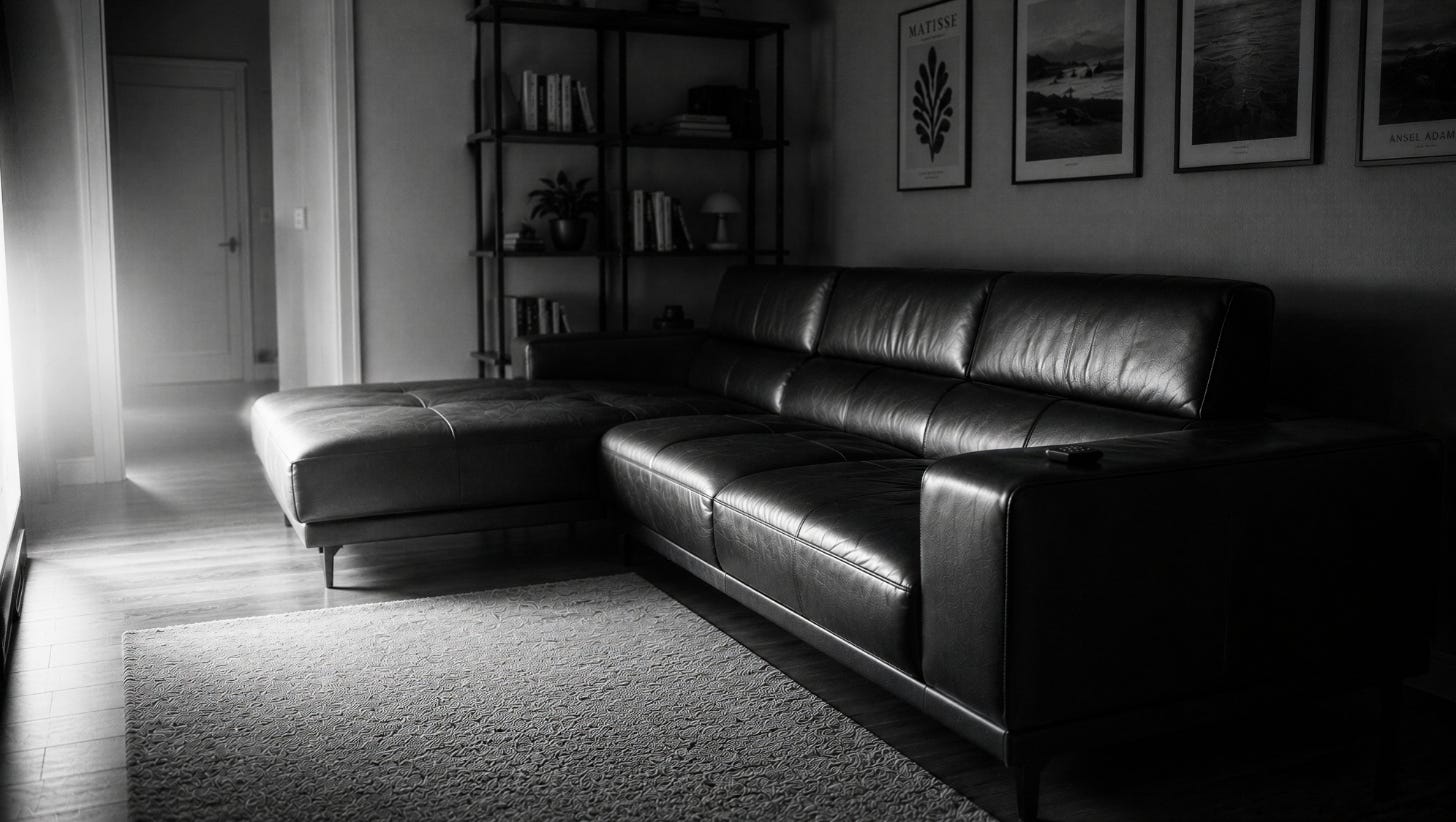
By nine at night, I was on the couch. Sports on the TV. Phone in my hand. Every weekday I had nothing left to give, and the couch and the screen were the only things that didn’t ask anything from me. I called it rest. It wasn’t. It was numbness. The only way I knew how to not feel the weight for a little while.
My body was talking the whole time. Chest pressure. Shortness of breath doing ordinary things. A fatigue that sleep never really fixed. I had a reason for every single one of them. Stress. A long week. Getting older. Something I could push through.
I kept pushing.
———
Most of us carry the same assumption. We think that when it matters enough, something inside us will rise to meet the moment. That the right level of care, the right level of exhaustion, the right fear will finally flip the switch and we’ll make the better choice.
It doesn’t work that way.
What I lived through, and what research has since confirmed, is that the tired self doesn’t choose. It finds the path that was already there. The brain stops asking “What do I want?” and starts asking “What do I usually do here?” That shift happens without warning. And by the time you notice it, you’re already doing the thing you told yourself you wouldn’t do.
By eight or nine at night, after a full day of decisions, the part of your brain that does intentional thinking has been running hard for hours. It’s depleted. Not as an excuse. As a mechanical fact. What takes over in its place is familiarity. Automation. Whatever has been done before and requires the least to start again.
The moment you are trying to win the battle of the couch is almost always the moment you have the least to fight with. We’re all designed that way.
———
The second heart attack came on New Year’s Eve 2020.
My brother and his family were over at our place. Good food, music playing, fireworks going off outside. The kind of night that is supposed to feel festive.
Somewhere around 2 in the morning, shoulder pain hit.
My first thought: this can’t be happening again. Not now.
My wife got me to the ER. From there, ambulance to the main hospital. It was my first time ever riding in the back of one. The whole thing felt like a bad dream. I kept waiting to wake up from it.
2020 was nothing like 2015. In 2015, it was a slow numbness. Like I had slept on my arm wrong and it just never went away. I kept finding reasons to explain it. It never screamed.
2020 screamed. Sharp enough that I could not lie down at all. There was no explaining it away. No rationalizing it into something manageable.
Thankfully, no blockage again. Second miracle.
This time I knew I could not just hope my health would get better. I had to put together a plan that actually pushed it there.
What changed after that was not discipline. It was not motivation, not in any way that lasted. What changed was that I stopped trying to win the hard moments and started deciding things before those moments arrived.
Walking window protected the night before, not negotiated the morning of. Bible study first, before the phone, before the news, before anything else has a chance to fill the space. These are not reminders. They are the system. They exist so that the nine o’clock version of me, the barely-awake-at-six version, the just-got-home-from-a-long-shift version, does not have to decide anything.
The decision was already made. All that version has to do is follow through.
Gary Keller said it plainly: “When our willpower runs out, we all revert to our default settings.”
The question has never been whether you have enough willpower. The question is what your defaults are set to.
———
If I could go back to the man on that couch in 2014, I would not tell him to try harder.
I would tell him to build something.
Because the tired self is not a problem to overcome. It is not a character flaw or a sign that you do not care enough. It is the most honest version of you. It shows up every single day. And it is the version your system needs to be built for.
Not your best day. Not the morning when everything lines up and you feel like a different person.
The ordinary Tuesday. The long Wednesday. The night when three things went wrong before you got home and you walked through the door already empty.
That version has already decided. The only real question is what you put in front of it before the day wore you down.
If the path of least resistance in your life leads somewhere worth going, you built it right.
If it doesn’t, this is the week to start building.
One step. One goal. One community.
Thanks for honestly sharing your experience Clinton. You're right that it's never about willpower. I believe there's no such thing. It's just doing things that are aligned with who you uniquely are. That's what makes sustainability easy :)