

The realization did not arrive all at once.
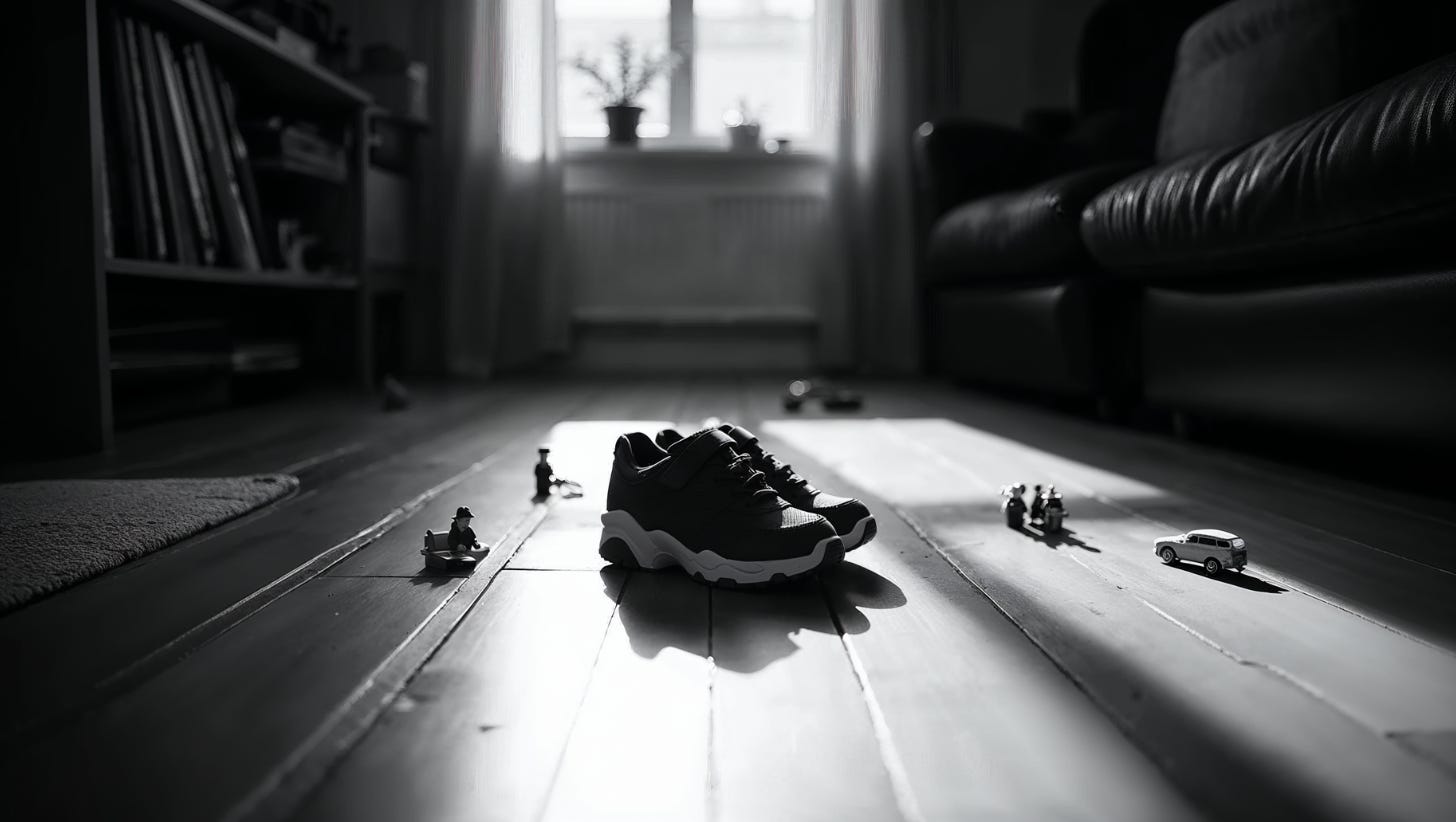
It came on an ordinary afternoon when my youngest son pulled me into his world, and I just went with it. We were not doing anything significant. He wanted to play hide and seek in the house. We played for what seemed like hours, although it was probably closer to 45 minutes. From there, he wanted to play another game. And I followed him. I was not thinking about steps. I was not thinking about a program or a block of time or whether this counted as exercise. I was just his dad, present in the middle of a Saturday, moving through the hours the way he moved through them.
There was something almost unfamiliar about it. Not the playing. The not fighting it. The absence of the low-grade resistance I had been carrying for months, the sense that I was supposed to be somewhere else doing something that looked more like discipline.
And when I looked at my steps that evening, I was already closing in on 8,000 steps.
I had not scheduled a single one of them.
The movement had been there the whole time. I had been so focused on what consistency was supposed to look like that I completely missed what was actually happening right in front of me.
I have made this move before. Three times now, in three different areas of my life. It took me until the third one to recognize the pattern.
The day I got married, I walked away from video games. Madden and 2K. Hours a day, deep investment, nothing casual about it. I was not a pick-up-and-put-down kind of player either. If I committed to something, I went all the way in. I knew rosters. I knew ratings. It was not just entertainment. It was the way I unwound, the way I competed when there was nothing else to compete in. That world meant something to me.
And then it just stopped.
Not because my wife asked me to. Not because someone made a case for it. God put it on me the moment I said I do. The clarity came with the commitment, and it was so clean it almost surprised me. I did not grieve it. I did not stumble through the first few weeks. I simply looked at the direction I had chosen and understood, without any drama, that this did not belong there anymore. That is the part I still think about. Not the sacrifice. The clarity. I did not wrestle with it because the direction was already decided.
Sports came years later, and it was a different kind of release.
I had been tracking the NFL, college football, high school recruits, depth charts, all of it, since I was a toddler. It was not just something I watched. It was part of how I understood myself and life. The knowledge, the analysis, the ability to talk about any team at any level, that was woven into my identity for decades.
Then COVID hit and the sports stopped. All of it, gone at once. And for a while the shows kept running anyway, the same voices filling airtime with nothing new to say, recycling old games and older arguments because there was nothing else. I watched that for a few weeks before I realized I was not actually missing the sports. I was just filling the silence with the habit of them.
That was the opening. When the games came back, I did not go back with them. By then I had already decided I wanted to go deep into business. Web design. Personal brand. AI. Productivity. The break had shown me what the space felt like without sports in it. And what I noticed was that I did not miss the thing itself. I missed the familiarity of it. Once I understood that, the decision was already made.
That is the thing about subtraction. It is never really about what is bad. It is about what competes with the direction you have already chosen. Proverbs 17:24 puts it plainly: a discerning person keeps wisdom in view, but a fool’s eyes wander to the ends of the earth. Once you understand that, the pivot stops feeling like a loss and starts feeling like a choice.
I did not fully understand that pattern until the third time it happened.
When I started taking my health seriously after the heart attacks, I tried the traditional approach.
Dedicated sessions. Time blocks. A structured program. And I liked it when it worked. But it did not fit the life I was actually living.
You cannot give a time block to a sick kid. When you have a job, a family, and a community you are building, the math does not cooperate. Small children could not care less what is on your calendar. If they need their mom or dad, the schedule dissolves. And when it dissolves enough times, guilt fills the space it leaves behind.
And that guilt has a particular texture. It does not arrive as a single moment of failure. It accumulates. It is the quiet voice that follows you through the day after you missed the morning walk. It is the mental math you do at 9 PM trying to figure out if there is still time. It is the way you wake up the next morning already behind, already negotiating with yourself before your feet hit the floor. And eventually, without meaning to, you stop calling it a scheduling problem. You start calling it a you problem. That is the part that does the most damage.
I kept restarting the same cycle. Force it. Miss it. Feel that weight. Tell myself tomorrow. Start over.
At some point I had to ask myself the same question I had already learned to ask about video games and sports.
Is this the right thing to protect, or is it the frame that needs to go?
The shift finally came to me.
I stopped trying to walk for exercise and started paying attention to how much I was already moving through a normal day. Without scheduling anything, without a program, without a dedicated block, I was already close to 8,000 steps. Moving around the house. Playing with the boys. Just living.
That observation led me to research I had not previously taken seriously. The communities with the longest-lived people on earth do not have gym memberships. They walk to their neighbors. They garden. They carry things. Movement is not something they schedule. It is something they live inside of. Scientists who study this call it NEAT, Non-Exercise Activity Thermogenesis, and the data shows it can account for as much as a 2,000 calorie difference per day between two people of similar size, not based on how hard they train, but on how much they simply move through their lives.
The bar was never as high as we were told. We just inherited a definition of exercise that was never designed for how most of us busy professionals actually live.
Needless to say, I do not walk for exercise anymore.
I live in motion.
I have now gone over 2 years consecutively with at least 10,000 steps. I even adjusted my goal in 2026 to 12,500 steps a day. Not because I found more discipline. Not because I built a better schedule. Because I stopped asking movement to perform inside a frame it was never designed to fit, and started paying attention to what was already happening when I was not fighting the day.
The guilt cycle has its own weight. The weight of someone who kept showing up, kept measuring himself against a standard he could not reach, and slowly started to believe the gap said something true about him.
It did not. It was not a failure of discipline. It was a failure of design.
And sometimes the clearest version of that truth arrives on a Saturday afternoon, following a kid around the house with nowhere else to be, realizing the thing you were chasing was already happening.
If this landed for you, forward it to someone who has been fighting the same cycle. They may need to hear it.
You came upon two important insights here Clinton. The first being that whatever you decide to do for your health needs to fit your unique preferences and reality. The second being that NEAT is often the secret sauce.
When I clean my house, or cook a big meal, I usually get in about 10,000 steps. Having my grandkids over usually gets me about 15,000. Lol 😆